Members and cookery students
Our Members site is an in-depth look at our work and kaiseki practice — a place to follow the seasonal changes happening around us and connect directly with what that means for cooking in Tasmania right now.
Lachlan shares recipes, technique notes and thoughts on particular produce as they come up through the year. Members are welcome to ask questions about their own cooking, whether you're a home cook or working professionally.
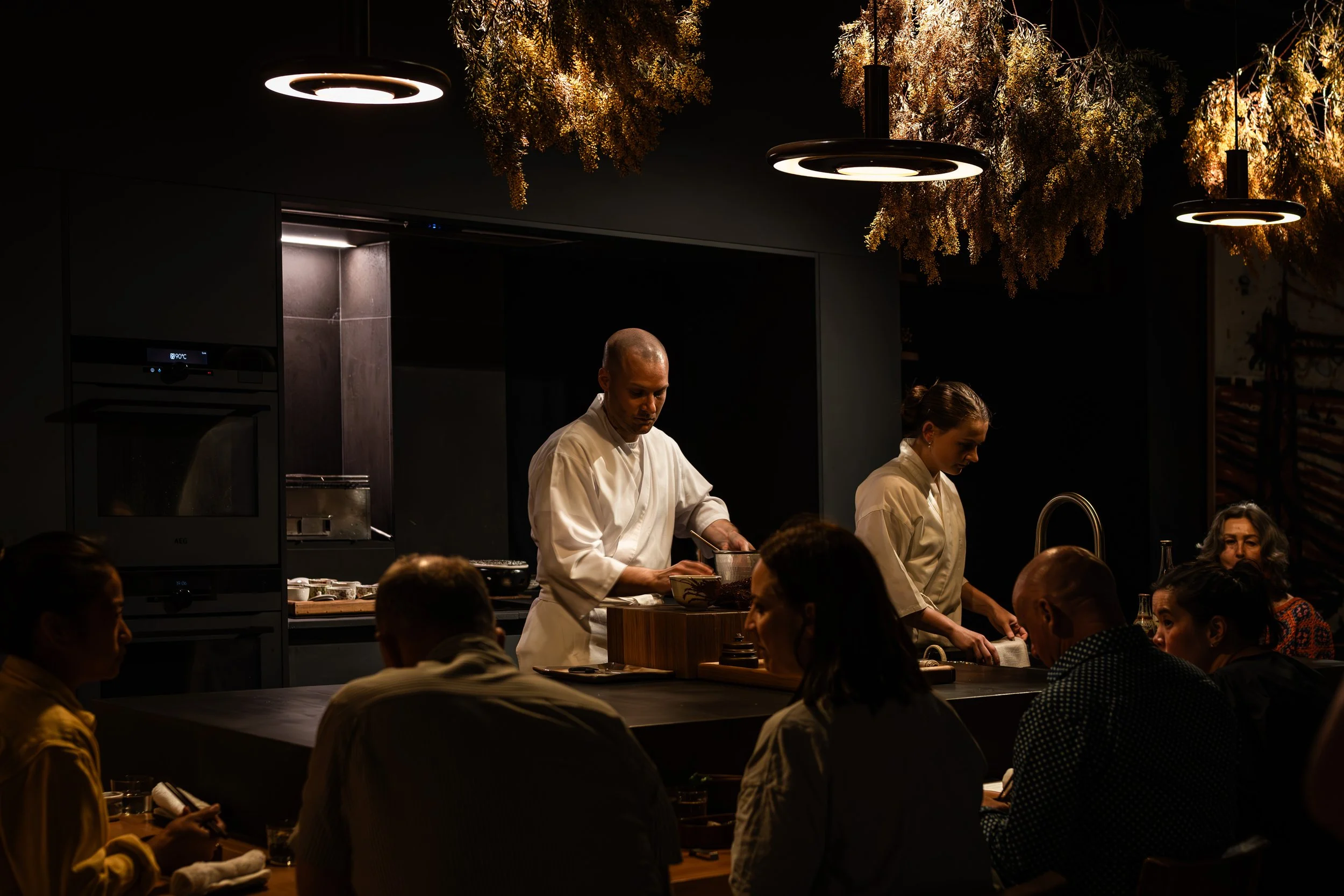
For Tasmanian members, informal appointments are available on Thursdays at Omotenashi — come in and talk through whatever's on your radar, whether that's a technique, a piece of produce, or something you're trying to figure out for a menu or upcoming project.
Seasonal Menu Item - Shiitake ChawanmushiWe serve a consistent version of this dish on the Omotenashi menu throughout the year, although Autumn is when we enjoy it most.
This recipe works with both fresh or dried mushrooms — Shiitake yielding the flavour profile we enjoy most, although others can be used accordingly. The recipe below uses dried Shiitake as a reference point. Using fresh mushrooms is encouraged, with your own judgement on quantities required for a flavoursome stock, in absence of fresh dried work great and can be measured easily.
Take
125g dried Shiitake
35g Kombu
Hon Mirin, Light Shoyu, Whole Eggs
3lt filtered water — the better the quality the better, fresh from the mountain is pretty good.
Add the water, mushrooms and kombu together in a pot and let sit for 30 minutes, then bring to a heat source and raise to no higher than roughly 80°C. Hold at this temperature for 90 minutes, then remove from the heat. Remove the kombu, leaving the Shiitake and liquid in the pot to cool to room temperature.
Once completely cooled, season the dashi to taste with Mirin and Shoyu. We season until it tastes just richer than a simple stock — like you could drink it as a broth, but with a notable salty-sweet quality. This slightly richer seasoning is intentional, to counter the whole eggs that will be added and rebalance the seasoning levels.
Strain the finished dashi through a fine filter — we use paper — and chill completely. Once cold, measure the volume you require. You will be working to an exact dashi-to-egg ratio, so you can choose any volume so long as you follow 3:1 — for example, 300ml dashi to 100g egg, 600ml to 200g, and so on.
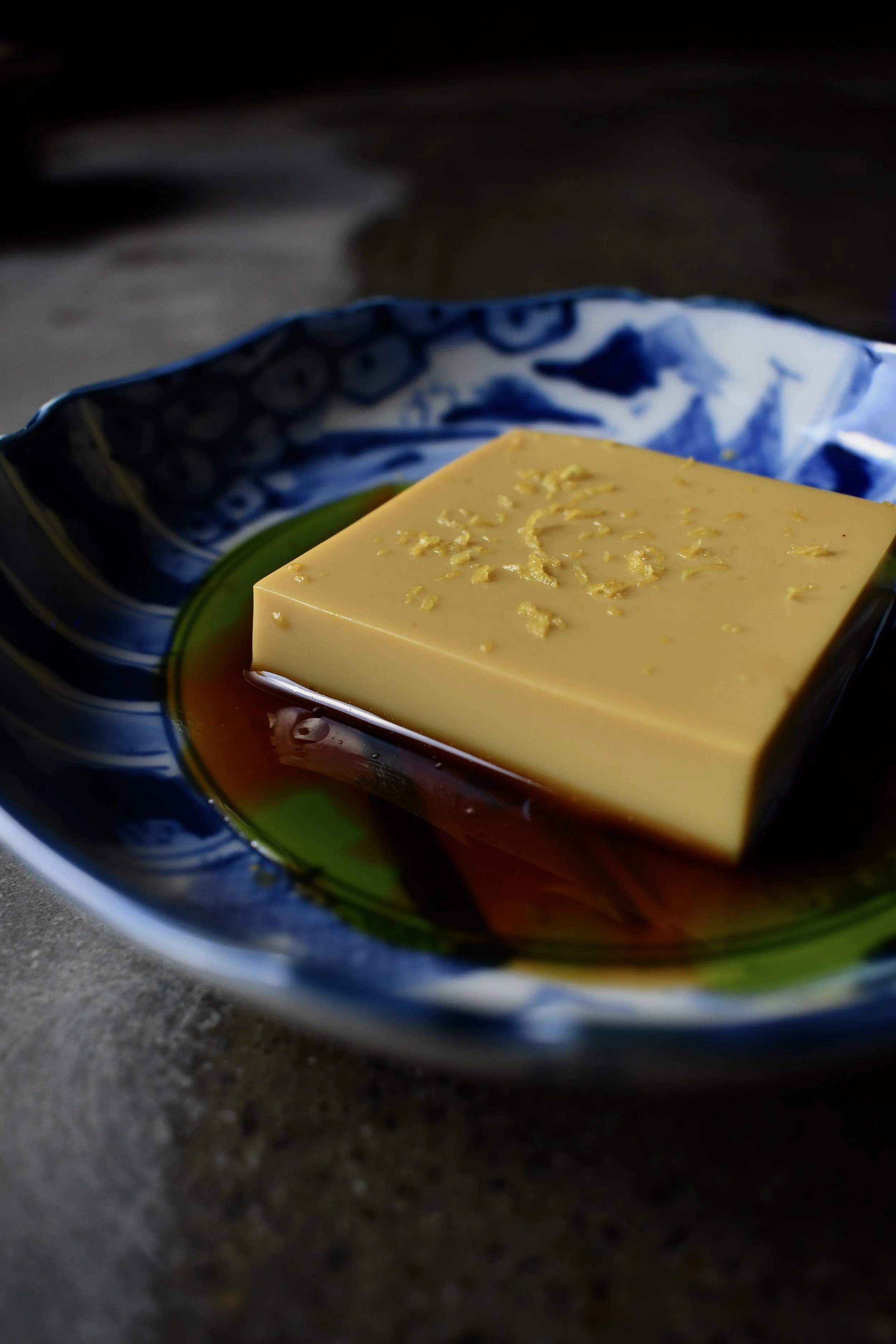
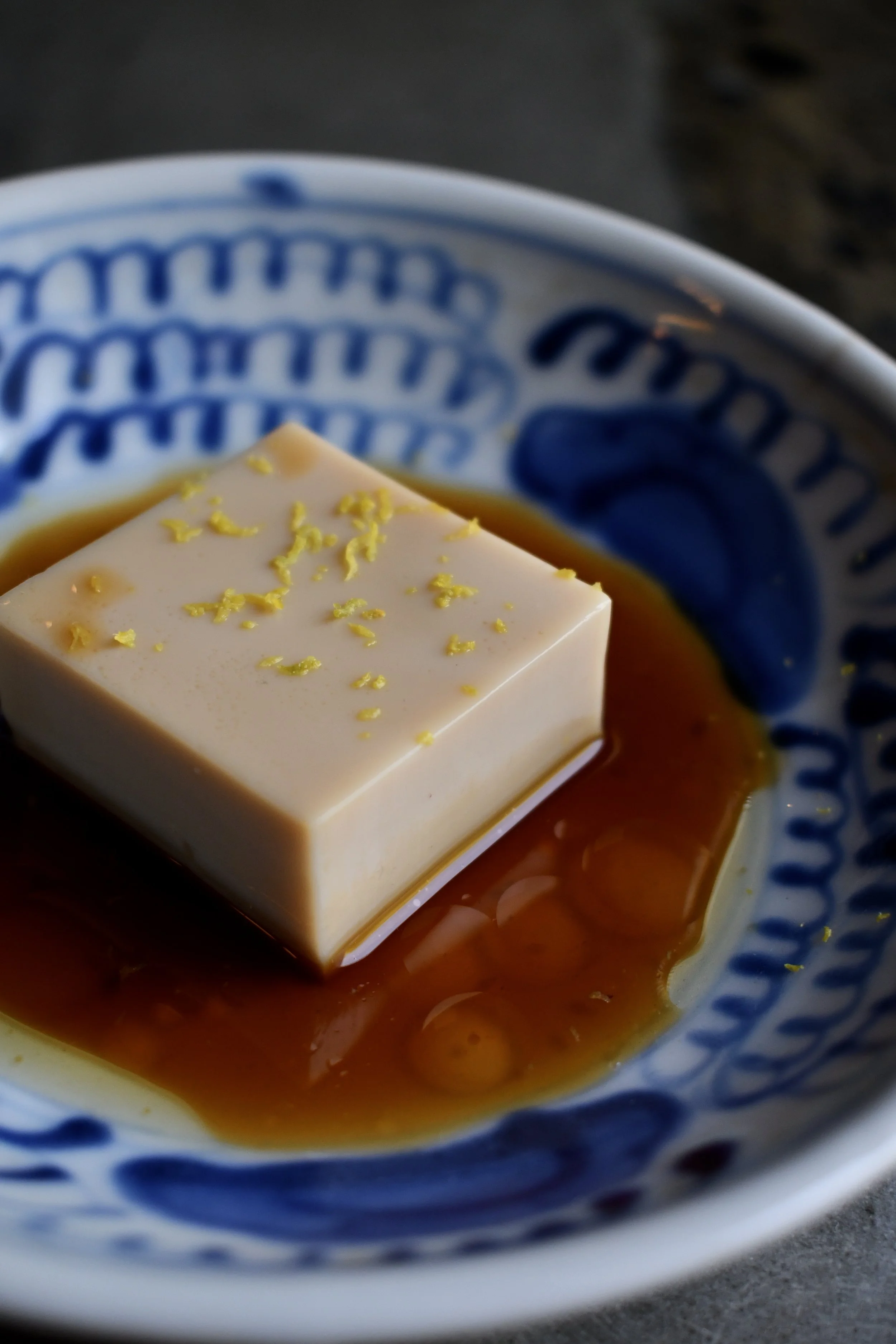
Egg quality matters enormously. Poor quality eggs will produce a cloudy, pale custard. High quality, fresh eggs will give you a deep yellow custard with a richer, more defined texture.
Whisk or use chopsticks to incorporate the eggs thoroughly into the dashi. Some recipes advise against overworking at this stage, but complete incorporation is what matters — strain and rest the mixture if needed. The cold liquid will help keep foaming in check. Once settled, strain through a fine strainer and it's ready to steam.
Preheat a steam oven on full steam, or set up steamer baskets over a double boiler on the stove. Measure the mixture into bowls — we use 120ml per portion — then cover each with a lid, cling wrap or foil and place in the steaming chamber. At 120ml, expect roughly 10–15 minutes to set, though this will vary depending on steam force, how closely the bowls are packed, and their proximity to the direct heat. These variables are easy enough to iron out with a few test runs.
We've almost always served our chawanmushi with spring onion oil, sweet ponzu and fresh citrus zest — not exactly how you find it in Japan, but it feels very us now.
For visual reference see the comparison between high quality fresh eggs and lesser quality eggs in the two custards below.